
A great leather jacket can transform any outfit — but only if you pick the right kind. Whether you’re eyeing a buttery biker silhouette at a boutique or a sleek vegan option online, understanding the real leather vs faux leather jackets debate is the single most important step before you spend a cent.
The wrong choice means wasted money, buyer’s remorse, or a jacket that cracks after two winters. In this guide, we break down everything: materials, durability, feel, cost, ethics, and how to spot the difference with your bare hands. By the end, you’ll know exactly which jacket belongs in your wardrobe.
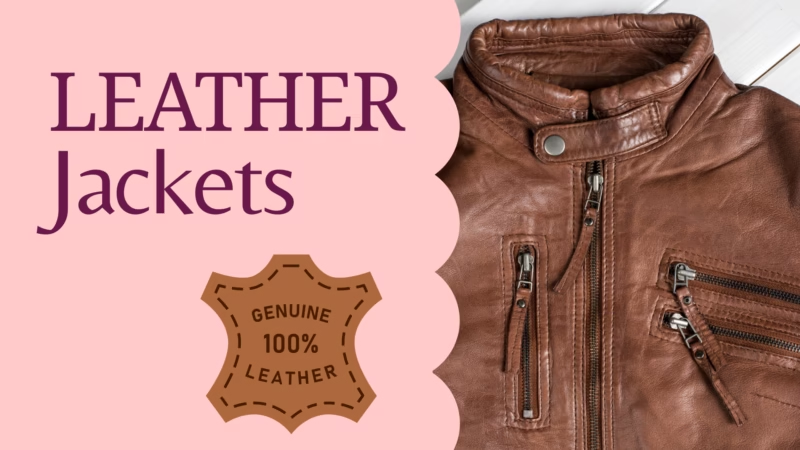
What Is Real Leather?
A genuine leather jacket is made from the hide of an animal — most commonly cattle, though lamb, goat, pig, and deer hides are also used. The hide is processed through tanning (using vegetable tannins, chrome, or synthetic agents) to prevent decay and create the supple, durable material we recognise as leather.
Real leather is a natural material, which means each hide carries unique grain patterns, slight imperfections, and a distinct character. No two genuine leather jackets are truly identical.
Types of Real Leather Used in Jackets
Premium
Full-Grain Leather
The highest quality leather. The entire grain surface is preserved, making it the most durable and most natural-looking. Develops a rich patina over time. Used in luxury jackets.
Popular
Top-Grain Leather
Slightly sanded to remove surface imperfections. More uniform appearance than full-grain. Still very durable and the most common type in mid-to-high range jackets.
Entry-Level
Genuine Leather
Made from the lower layers of the hide after top-grain is separated. Often coated with a synthetic surface. Less durable, but real animal leather nonetheless.
Textured
Suede Leather
Made from the inner split of the hide, giving a soft napped finish. Used in fashion-forward jacket styles. More delicate and requires careful maintenance.
What Is Faux Leather?
Faux leather — also called synthetic leather, vegan leather, or artificial leather — is a man-made material designed to replicate the look and feel of animal leather. It uses no animal hides and is produced entirely through industrial processes.
The two most common types used in faux leather jackets are:
Most Common
PU Leather (Polyurethane)
A fabric base coated with a polyurethane layer. More flexible and softer than PVC. Better resemblance to real leather. The dominant material in modern PU leather jackets.
Older Type
PVC Leather
Polyvinyl chloride coating over a fabric base. Stiffer and less breathable than PU. More water-resistant but prone to cracking. Less common in fashion jackets today.
Emerging sustainable leather alternatives — including Piñatex (pineapple fibre), Mylo (mycelium/mushroom), and apple leather — are gaining ground in the fashion world, offering more eco-friendly profiles than both PU and PVC.
Real Leather vs. Faux Leather Jackets: Key Differences
Appearance and Texture
Real leather has an organic, slightly irregular surface with natural pores and variations. It develops a patina with age — a hallmark of quality. Faux leather looks uniform and perfect out of the box, which can appear artificial to a trained eye. High-end PU leather has narrowed this gap considerably, but close inspection under light usually reveals the difference.
Durability and Lifespan
A well-maintained genuine leather jacket can last 20–30 years or more. It ages gracefully, becoming softer and more characterful over time. Faux leather, particularly PU, typically lasts 3–7 years before it begins to peel, crack, or delaminate — especially at stress points like elbows and collars.
Comfort and Breathability
Real leather breathes. Its natural pores allow air circulation, which means it adapts to your body temperature over time. Faux leather is essentially a plastic coating and does not breathe — it can feel clammy and hot in warmer weather.
Water Resistance
Faux leather (especially PVC) repels water very well. Real leather is naturally water-resistant to a degree but will absorb moisture if not treated. A quality leather conditioner and water-repellent spray keep genuine leather well-protected.
Maintenance Requirements
Genuine leather requires regular conditioning (every 3–6 months) to prevent drying and cracking. Faux leather needs only a wipe-down with a damp cloth. However, once faux leather starts to peel, there’s no meaningful repair — real leather can be resoled, re-dyed, and professionally restored.
Environmental Impact
The environmental picture is genuinely complex. Leather production involves livestock farming (land use, methane emissions) and the tanning process (chemicals, water use). However, it’s a natural biodegradable material. PU and PVC leather are petroleum-based plastics that do not biodegrade and contribute to microplastic pollution. Newer plant-based alternatives offer a more credible sustainable leather alternative.
Ethical Considerations
For many shoppers, this is the deciding factor. Real leather is an animal product — ethically problematic for vegans and those concerned about animal welfare. Faux leather is animal-free. However, environmental advocates argue that long-lived genuine leather may ultimately have a lower lifetime footprint than short-lived plastic alternatives that end up in landfill.
Price Comparison
Genuine leather jackets typically range from $150 to $1,500+ depending on hide quality and craftsmanship. Faux leather jackets range from $30 to $200. The cost-per-year of ownership often favours real leather when longevity is factored in.
| Feature | 🐂 Real Leather | 🧪 Faux Leather |
|---|---|---|
| Appearance | Natural, unique grain patterns | Uniform, can look artificial |
| Lifespan | 20–30+ years | 3–7 years |
| Breathability | High | Low |
| Water Resistance | Moderate (treatable) | High (PVC) / Moderate (PU) |
| Maintenance | Conditioning required | Wipe-clean ease |
| Repairability | Fully repairable | Peeling is irreversible |
| Price | $150 – $1,500+ | $30 – $200 |
| Animal-Free | No | Yes |
| Biodegradable | Yes | No (PU/PVC) |
| Patina Over Time | Develops beautifully | Deteriorates / Peels |
How to Identify Real Leather from Faux Leather
Before making a purchase — especially online — use these quick tests to determine what you’re actually buying.
- Texture TestRun your fingertip across the surface. Real leather feels slightly irregular, warm, and porous. Faux leather feels perfectly smooth, plasticky, and cool to the touch.
- Smell TestReal leather has a distinctive organic, earthy smell that cannot be replicated. Faux leather smells of chemicals or plastic. This is one of the most reliable ways to tell them apart.
- Water Absorption TestPlace a small drop of water on an inconspicuous area. Real leather will slowly absorb it, darkening slightly. Faux leather will bead the water and it will roll off.
- Edge InspectionLook at the raw edges and seams of the jacket. Real leather edges show natural fibres and layering. Faux leather reveals a fabric backing with a thin coating on top.
- Label Reading TipsCheck the care label. “100% Leather,” “Genuine Leather,” or “Full-Grain Leather” indicates real leather. Labels reading “Man-Made Materials,” “PU,” “Synthetic,” or “Vegan Leather” confirm faux. Beware of labels that simply say “Leather” — this may indicate only a leather-look finish.
Pros and Cons of Real Leather Jackets
Advantages
✦ Advantages
- Exceptional longevity — a lifetime investment with proper care
- Develops a rich, personal patina unique to the wearer
- Natural breathability for year-round comfort
- Fully repairable and can be professionally restored
- Superior tactile feel and softness over time
- Retains resale value, especially premium grades
✦ Disadvantages
- High upfront cost compared to faux alternatives
- Requires regular conditioning and proper storage
- Ethical concerns related to animal welfare
- Heavy environmental footprint from tanning processes
- Can be damaged by prolonged water exposure if untreated
- Heavier than faux leather equivalents
Pros and Cons of Faux Leather Jackets
✦ Advantages
- Animal-free and cruelty-free — ideal for vegans
- Significantly more affordable entry price
- Easy to clean with a simple wipe-down
- Available in a vast range of colours and finishes
- Naturally water-resistant without treatment
- Lighter weight for everyday comfort
✦ Disadvantages
- Peels, cracks and deteriorates — typically within 3–7 years
- Poor breathability — can feel hot and clammy
- Not biodegradable — ends up in landfill
- Cheaper look and feel, especially under close inspection
- Cannot be repaired once delamination begins
- Does not improve with age or develop patina
Which Leather Jacket Is Right for You?
There’s no single right answer — it depends on your priorities, lifestyle, and budget. Here’s a quick breakdown to guide your decision:
💰
Budget-Conscious Buyers
A quality PU leather jacket offers a leather-look without the high initial outlay. Just factor in replacement costs every few years.
✨
Luxury Fashion Lovers
Full-grain or top-grain leather is the undisputed choice. It’s an investment piece that only gets better with time.
🌱
Eco-Conscious Consumers
Consider plant-based alternatives like Piñatex or Mylo. If choosing conventional options, a long-lived genuine leather jacket may outlast multiple faux replacements.
🧥
Frequent Wearers
Real leather rewards daily wear — it softens and moulds to your body. Faux leather will show wear-and-tear significantly faster under frequent use.
🛍️
Trend-Focused Shoppers
If you follow fast-changing trends and don’t expect to wear the same jacket for years, an affordable faux leather jacket lets you refresh your look without guilt over a short lifespan.
Common Myths About Leather and Faux Leather
Myth
“Faux leather is always more eco-friendly than real leather”
Not necessarily. PU and PVC are petroleum-based plastics that take centuries to break down and shed microplastics. A long-lived genuine leather jacket, especially vegetable-tanned, can have a lower lifetime environmental impact.
Myth
“All real leather jackets are the same quality”
Far from it. Full-grain leather and genuine leather (the lowest grade) are worlds apart in durability and feel. Always check the specific leather grade before purchasing.
Myth
“Faux leather looks fake and cheap”
Modern high-end PU leather has come a long way. Premium synthetic jackets from reputable brands can convincingly mimic the look of real leather from a distance, though they don’t match the feel or ageing quality.
Myth
“Real leather is waterproof”
It isn’t — it’s water-resistant at best. Without proper sealing and conditioning, real leather absorbs moisture, which can warp and damage the material over time.
Myth
“Faux leather doesn’t need any maintenance”
While faux leather is easier to clean, it still benefits from occasional conditioning with specialist synthetic leather products to slow down the peeling and cracking process.
Caring for Real and Faux Leather Jackets
Proper maintenance dramatically extends the life of any leather jacket — real or faux. Here’s what you need to know. (For a deeper dive, see our full Leather Jacket Care Guide.)
🐂 Real Leather Care
- Condition every 3–6 months with a quality leather conditioner
- Store on a wide, padded hanger — never folded or compressed
- Keep away from direct heat sources and sunlight
- If wet, air dry naturally at room temperature — never use a hairdryer
- Apply a leather protector spray at the start of each season
- Clean spills immediately with a dry cloth — avoid soaking
- For deep cleaning, use a professional leather cleaner
🧪 Faux Leather Care
- Wipe down with a damp cloth and mild soap solution
- Avoid harsh chemical cleaners that degrade the coating
- Store flat or on a hanger — folding creates permanent crease lines
- Keep away from sharp objects that can tear the surface coating
- Apply a faux leather conditioner to delay peeling
- Avoid excessive heat — faux leather warps and cracks in high temperatures
- Do not machine wash unless the label explicitly permits it