
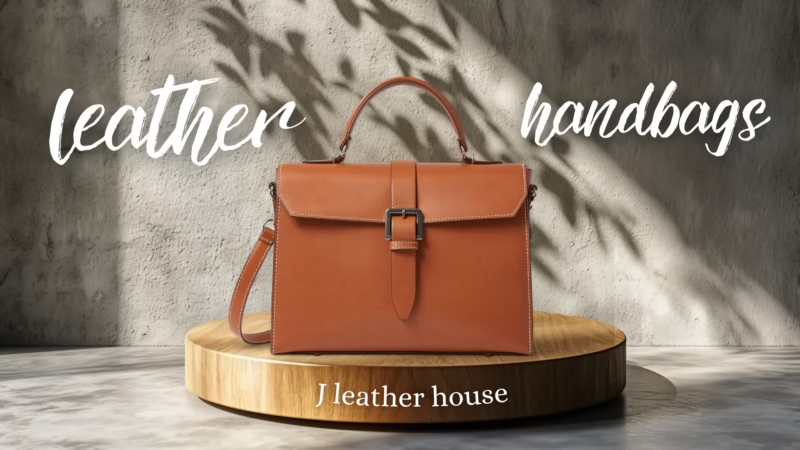
Let’s be honest — buying a leather handbag isn’t just a purchase. It’s an investment. A good one will last you years, maybe even decades, and become one of those things you reach for without even thinking. A bad one? You’ll be back at the store in six months, frustrated, wondering where you went wrong.
The problem is, walking into a store (or scrolling through pages online) and picking “the prettiest one” almost never works out. You end up with a bag that looks gorgeous on a shelf but doesn’t fit your laptop, or one that’s so stiff it takes three months to break in, or — worst of all — one that starts peeling after a single season because it wasn’t real leather at all.
This guide is here to fix that. Whether you’re a busy professional, a stay-at-home parent, a frequent traveler, or someone who just wants one reliable everyday bag, we’re going to walk through exactly how to pick the right leather handbag for your lifestyle — and why getting this decision right is so worth the effort.
Why Leather Still Reigns Supreme
Before we get into the how-to, let’s address the obvious: why leather in the first place?
In a market flooded with canvas totes, nylon backpacks, and vegan alternatives, genuine leather holds its own for very good reasons. It’s durable. It develops a patina over time that actually makes it look better with age. It’s water-resistant when properly cared for. And there’s a quality to a well-made leather bag — the weight, the smell, the way it feels in your hand — that synthetic materials simply haven’t been able to replicate.
That said, not all leather is created equal, and not every leather bag is right for every person. That’s exactly what we’re here to figure out.
Step 1: Understand the Different Types of Leather
This is where most buyers skip ahead too fast — and regret it later. The type of leather determines how your bag will feel, how it will age, and how much care it needs.
Full-Grain Leather is the gold standard. It comes from the top layer of the hide and retains all of the natural grain. It’s the most durable, develops a beautiful patina, and resists moisture well. Bags made from full-grain leather are an investment upfront but will outlast everything else.
Top-Grain Leather is sanded and treated to remove imperfections. It’s more uniform-looking, slightly more affordable, and still very high quality — just a step below full-grain. Most mid-to-high-end bags on the market use top-grain leather.
Genuine Leather sounds impressive, but it’s actually a marketing term for lower-quality leather made from the leftover layers of the hide. It’s real leather, yes, but it’s thinner, less durable, and more prone to cracking and peeling over time.
Bonded Leather is essentially leather scraps glued together and pressed onto a backing. Avoid it for anything you want to last. It may look fine in the store, but it will peel and flake within a year or two.
Nubuck and Suede are softer, brushed leathers that have a velvety texture. They look gorgeous but require much more maintenance and aren’t great for everyday use if you’re in wet climates or tend to be hard on your bags.
Pro tip: When you’re shopping, always check the product description for the type of leather. If it just says “leather” without specifying, that’s usually a red flag that you’re looking at genuine or bonded leather.
Step 2: Match the Bag Style to Your Daily Life
This is the big one. The most beautiful bag in the world is useless if it doesn’t fit your actual routine. Think honestly about how you live your life day to day.
For the Working Professional
If you’re heading into an office five days a week, carrying a laptop, notebooks, a charger, and all the other stuff that comes with a 9-to-5, you need a structured bag with serious organizational capacity.
Look for a leather tote or a leather work bag/satchel. These styles offer a wide opening, multiple compartments, and enough room to fit a 13–15 inch laptop without cramming everything in. The leather should be stiff enough to hold its shape when set on the floor (a floppy bag in a work setting looks unprofessional and loses things constantly).
Key features to prioritize: padded laptop sleeve, exterior pockets for quick-grab items, sturdy handles with drop length long enough to fit over your shoulder, and metal feet on the bottom to protect it from floor wear.
For the Everyday Minimalist
Maybe you don’t need to haul a laptop around. You want something that fits your phone, wallet, keys, and maybe a small notebook without feeling like you’re carrying a suitcase.
A leather crossbody bag or a leather bucket bag is your move. Crossbodies are especially practical — hands-free, comfortable, and perfectly sized for essentials. Bucket bags offer a little more room and have a casual chicness that works for almost any outfit.
For minimalist use, look for a bag that’s soft and pliable rather than structured. You want something that moves with you.
For the On-the-Go Parent
Parents need bags that can handle the chaos of real life — diaper bags, snacks, small toys, and whatever else ends up in there. But that doesn’t mean you have to sacrifice style.
A large leather tote with a wide opening is ideal. You’ll be able to see inside easily, and the spaciousness handles everything from wipes to your own wallet without making you dig through three separate compartments to find anything.
Look for leather that’s easy to wipe clean (top-grain or treated full-grain is great for this), and make sure the straps are long enough to carry comfortably when your arms are full.
For the Frequent Traveler
Travelers need bags that are smart and practical — ones that survive overhead bins, cobblestone streets, and unpredictable weather without looking destroyed by the end of the trip.
A leather backpack or a leather convertible bag (one that shifts between backpack and shoulder bag) is a fantastic choice. Look for a zip closure rather than a snap or magnetic clasp for security, and make sure there’s a luggage sleeve that slips over a rolling suitcase handle if you’re often in airports.
Durability is paramount here. Full-grain or thick top-grain leather is worth every penny for travelers who are genuinely putting their bag through the wringer.
For Special Occasions
If you want a leather bag purely for evenings out, dinners, and events, size down dramatically. A leather clutch or small leather envelope bag hits the right note — elegant, grown-up, and just big enough for the bare essentials.
For occasion bags, you have more flexibility to prioritize aesthetics over function. This is where you can afford to go for softer, more refined leathers like nappa or even suede.
Step 3: Choose the Right Size
Even within the right style category, size matters enormously. A tote that’s too small defeats the purpose. A crossbody that’s too large becomes awkward.
Here’s a quick general guide:
- Small (under 8 inches wide): Phone, cards, keys — that’s about it. Best for evenings and light outings.
- Medium (8–12 inches wide): Phone, wallet, keys, makeup bag, small notebook. The sweet spot for most casual-to-everyday use.
- Large (12–16 inches wide): Laptop (13″), full-size wallet, water bottle, daily essentials. Great for work and travel.
- Oversized (16+ inches): Maximum capacity. Ideal for parents, travelers, and anyone who just likes having room to breathe.
A practical tip: before you buy, gather everything you normally carry and lay it out. Then find the approximate measurements of the bag you’re considering and ask yourself honestly — does it all fit?
Step 4: Pay Attention to Hardware and Construction
A leather bag is only as good as its construction. Beautiful leather on a poorly-made bag is a waste of money.
Stitching should be tight, even, and consistent. Run your fingers along the seams — they should feel smooth, not rough or uneven. Double stitching at stress points (handles, strap attachments) is a sign of quality.
Hardware — zippers, clasps, D-rings, buckles — should feel solid and weighty, not hollow or flimsy. Metal hardware should be labeled as brass, gold-tone, or silver-tone. Cheap plastic or pot-metal hardware will tarnish, break, or snag over time.
Lining is often overlooked but matters for day-to-day use. A quality lining (usually fabric, leather, or suede) makes it easier to find things and protects the inside of the bag from wear. Avoid bags with a painted or stiff plastic-feeling interior.
Zippers specifically should glide smoothly without catching. YKK is the gold standard for zipper brands — if you see it mentioned in product details, that’s a good sign.
Step 5: Think About Color and Versatility
The color of your leather bag is ultimately personal, but there are a few strategic considerations worth thinking through.
If this is going to be your one everyday bag, neutrals are your best friend. Black, cognac/tan, camel, and deep burgundy all go with virtually everything and don’t show wear as dramatically as lighter colors.
If you already have a neutral-colored everyday bag and you’re adding something new, this is where you can afford to be bolder — a forest green, a cobalt blue, or a warm rust can become a signature piece.
Light colors like white, blush, and cream are stunning but require much more maintenance. They show dirt, scuffs, and staining much more readily, so unless you’re prepared to clean and condition them regularly, they’re better left as occasion-specific bags.
Step 6: Set a Realistic Budget — And Stick to It
Here’s the truth about leather handbag pricing: you generally get what you pay for, but there are sweet spots at every level.
- Under $100: You’re almost certainly looking at genuine leather at best, bonded leather at worst. Fine for a short-term bag, but don’t expect longevity.
- $100–$300: The range where you’ll find quality top-grain leather from reputable independent brands. A solid bag at this price point, chosen carefully, can last years.
- $300–$700: Mid-luxury territory. Well-made, beautiful leather, excellent construction. This is the investment-bag range for most people.
- $700 and up: Designer and luxury brands. At this level, you’re paying partly for the name, but also often for exceptional craftsmanship, heritage leather sources, and lifetime repair programs.
The most important thing is to buy the best quality you can comfortably afford — and to buy less to buy better. One great leather bag beats three mediocre ones every time.
How to Care for Your Leather Handbag
Getting the right bag is only half the equation. Taking care of it ensures it actually lasts.
- Condition it regularly. Use a leather conditioner every few months to keep the leather supple and prevent cracking. Dry leather is damaged leather.
- Protect it from water. Use a leather protector spray when you first get the bag, and re-apply every season. If your bag gets wet, blot it gently — don’t rub — and let it air dry away from heat.
- Store it properly. When not in use, stuff your bag with tissue paper to maintain its shape and keep it in a dust bag (most quality bags come with one). Don’t hang it by its handles long-term — this stretches them.
- Clean stains promptly. Use a soft, damp cloth and a small amount of gentle leather cleaner. Avoid harsh chemicals or alcohol-based products.
- Give it a break. If you carry the same bag every day, rotate it with something else occasionally to let the leather rest and recover.
Final Thoughts: Buy for Your Life, Not for the Feed
Social media has a way of making us buy things for how they photograph, not for how they actually work in our real, everyday lives. The most important thing you can do when shopping for a leather handbag is to be honest with yourself about how you actually live — not how you wish you lived, or how a lifestyle influencer lives.
Buy the bag that fits your actual routine. The one that holds what you actually carry. The one that works with the way you actually dress and move through the world. Do that, and you’ll end up with a leather handbag that you reach for every single day — one that gets better with every year you carry it.